By Shannon Durazo
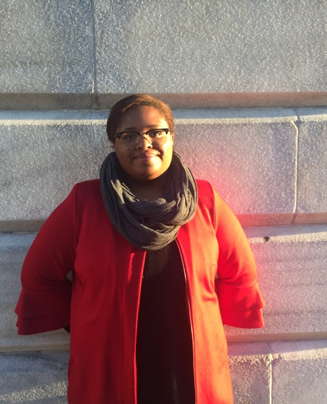
WASHINGTON – For Jordan-Marie Smith, an associate producer at The Washington Post, doing the most is never good enough.
A former production assistant at the NPR show “All Things Considered,” Smith has wanted to be in audio journalism since she first heard Michele Norris on her local WUNC station. The North Carolina native was 8 years old at the time, and had no idea the person speaking through her mother’s car radio was someone like her.
“When I finally saw Norris on WUNC TV, I was like ‘what, she’s a black woman?” said Smith. “I thought, ‘this is something I could do,’ because I saw someone who looked like me doing it.”
Representation sparked the fire for Smith, but she attributes her success to many other factors, specifically her professionalism, creativity and an insatiable desire to always do more.
As a journalism student at American University from 2011 to 2015, Smith was involved in many student media groups and societies, including hosting a radio show on WVAU and an editorial position at The Eagle. She also juggled other outside commitments, including a fellowship with Politico and an intern position at NPR, one in which she beat out hundreds of other applicants.
Despite her many accomplishments, Smith said she wonders if she could have done more.
“It seems like a lot, but to me it’s not enough,” said Smith. “I could have also been on the debate team. … I could have done film.”
“Jordan-Marie Smith was a model for the ideal SOC student,” said Margot Susca, a journalism professor at American. “Through her extracurricular work and her academics it was clear she was going to be a standout.”
In addition to her strong work ethic, Susca said Smith was admirable in how she was “never frazzled,” despite the many different activities she juggled in school.
This trait has notably followed Smith into the professional world.
“Jordan-Marie is able to be incredibly calm under pressure,” said Maggie Penman, Smith’s co-worker and producer at The Washington Post.
“There are a lot of people in news who get really stressed out, and getting really stressed out doesn’t make things happen any faster,” Penman said.
Smith can’t locate the source of her level-headed nature under high pressure, but believes it functions as a contradiction unique to her.
“If I’m not freaking out then it’s a stressful situation, and if I am freaking out then I have nothing to worry about,” said Smith.
In terms of work, Penman said Smith “really shines” when she is working on segments that allow her to be creative, but is equally impressive with broad pieces “that present larger ideas about the world we live in.”
These types of stories are typically longer features with a human-interest focus, Smith’s favorite to write.
At American, it was an anonymous profile of a student coming up in the BDSM community, and at NPR a feature about the Pulse nightclub shooting that served to humanize the loss. She has covered everything from metal bands to haunted dolls, and has organized conversations with compelling figures in politics and pop culture — from Bernie Sanders to the “Broad City” girls, Abbi Jacobson and Ilana Glazer.
“She just came in and was enthusiastic and ready to make a show, and make a show good,” said Theo Balcomb, Smith’s mentor and former supervising producer at “All Things Considered.”
Balcomb said her most memorable encounters with Smith were when Smith, a production assistant at the time, pitched impossible ideas such as producing and conducting an interview with Michelle Obama. She didn’t get that interview.
“I will never forget that she was so excited and willing to ask for things that she wanted, and I have always really admired that about her,” Balcomb said.
Despite it being her dream job from a young age, after over a year as a contract producer at NPR, Smith again said she felt the need to do more.
“If I’m comfortable then I feel like something is wrong,” said Smith.
So, she switched to podcasting, first at McClatchy and now at The Washington Post. Smith said she plans to stay there to try to climb the ranks, and is optimistic she’ll be able to.
Above all else, this optimism is what her co-workers speculate allows her to continue to do more.
“Newsrooms can be really stressful, sometimes negative places,” said Penman. “There’s a lot of bad news in the world and there is a lot of news happening all the time. … I think anyone who doesn’t let it get to them is a gem.”
 The Washington Most